
Double-Glazed Window Condensation in Dubai: Failed Unit Replacement Guide
Diagnose condensation in Dubai double-glazed windows and plan the right remedy for failed sealed units, frames, drainage, glass matching, access, and replacement quotes.
Quick answer
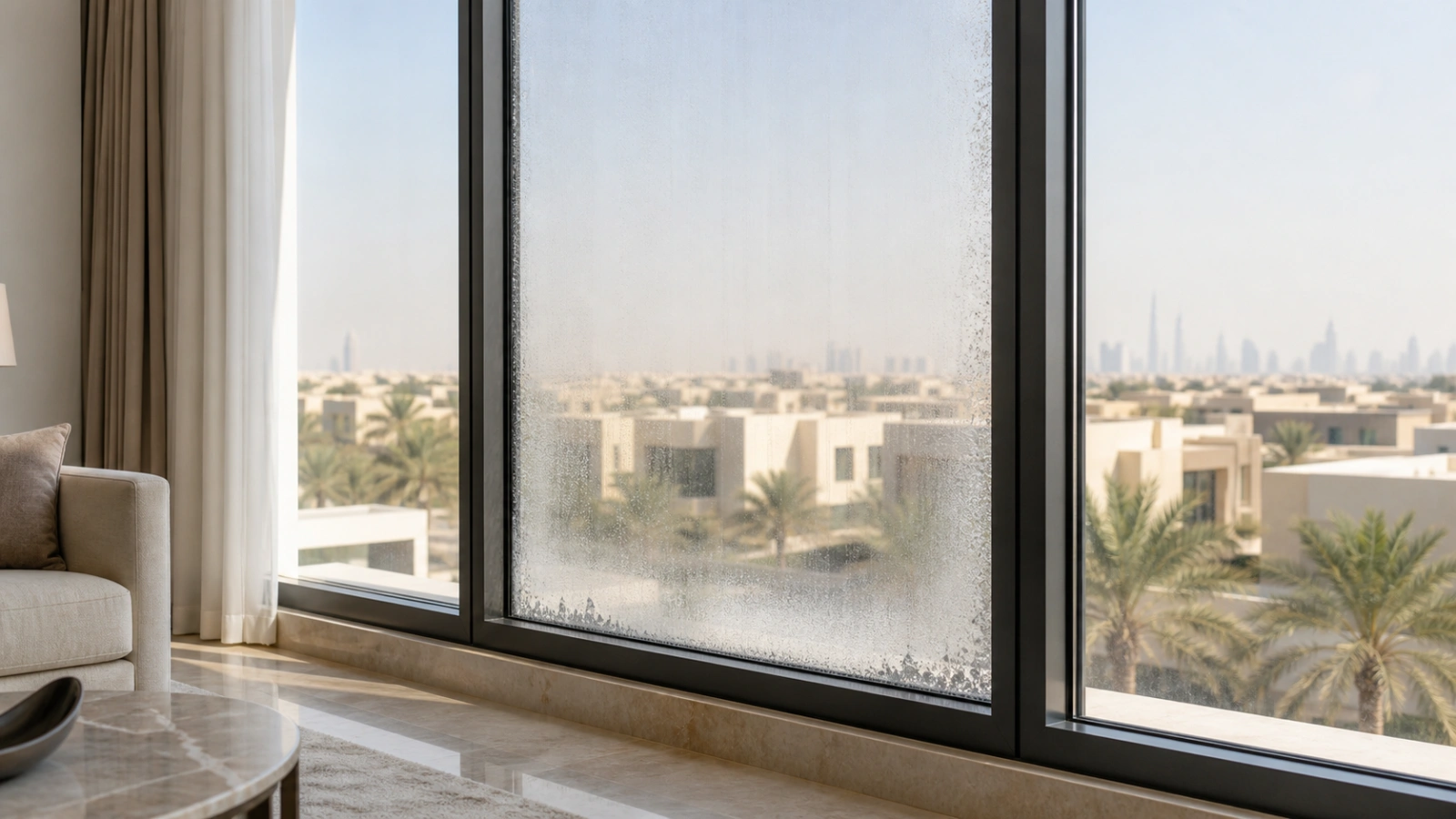
Condensation trapped between the panes of a double-glazed window usually indicates that the insulated glass unit's edge seal has failed. The cavity can no longer remain dry, so moisture enters and creates mist, droplets or a cloudy film that cannot be wiped from either exposed surface. Cleaning will not fix this condition, and drilling a vent hole does not restore the unit's original thermal or weather performance. The usual permanent remedy is to replace the sealed glass unit after checking why it failed and whether the aluminium frame, glazing components and drainage remain serviceable.
First identify where the moisture sits. Room-side condensation, exterior condensation and moisture inside the cavity have different causes. A site survey should also check glass dimensions and build-up, spacer colour, coatings, frame rebates, gaskets, setting blocks, drainage, sealants, nearby leaks and safe access. Glass World supports glass replacement, aluminium and glass works and window repairs across Dubai.
Is the condensation really between the panes?
Wipe the inside and outside faces with separate clean cloths. If the fog or droplets remain in the same place and cannot be touched from either side, they are probably within the sealed cavity. Failed units often show a persistent mist near the lower edge first, then develop mineral marks or a wider cloudy area. The pattern may change with temperature and sunlight, so take photographs at several times of day and note whether the defect clears temporarily.
Condensation on the room-side face is different. It forms when humid indoor air meets glass cold enough to reach the dew point. Air-conditioning settings, cooking, showers, drying laundry, blocked ventilation and cold perimeter zones can all contribute. Condensation on the exterior face can occur on thermally efficient glazing under particular weather conditions and does not automatically mean the unit has failed. If the source is uncertain, a survey is more useful than ordering glass from a photograph alone.
Why insulated glass units fail in Dubai
An insulated glass unit is made from two or more panes separated by a spacer and sealed around the perimeter. The edge system limits moisture entry and contains the dry air or gas cavity. Over time, heat cycles, ultraviolet exposure, building movement, pressure changes and material ageing can stress that edge. Dubai's intense solar exposure makes correct glass selection, edge protection, frame drainage and installation clearances especially important.
Premature failure can also follow standing water in the glazing rebate, blocked drainage slots, incompatible sealants, damaged gaskets, insufficient edge clearance, missing or misplaced setting blocks, frame distortion, glass-to-metal contact or an edge damaged during handling. Water staining around the frame may point to a perimeter or drainage problem as well as a failed unit. Replacing the glass without correcting the underlying condition can shorten the new unit's life.
Can a misted double-glazed unit be repaired?
A sealed unit is manufactured as a complete assembly. Once its primary moisture barrier has failed, wiping, resealing the visible frame perimeter or applying film cannot remove contamination from the cavity and recreate the factory seal. Some services drill small holes and attempt to clear the moisture. This may improve appearance temporarily in selected situations, but it does not return the original sealed-cavity construction, gas content, coating protection or declared thermal performance.
For a durable result, replacement of the insulated glass unit is normally the practical route while retaining the frame when it is sound and compatible. A complete window replacement may be more appropriate when the aluminium is distorted or badly corroded, drainage cannot be restored, beads or gaskets are obsolete, several units have failed, opening hardware is worn, air or water leakage is widespread, or the existing system no longer meets the project's performance needs. The double-glazed window replacement guide covers wider upgrade decisions.
Match the replacement glass correctly
A replacement should be specified from evidence rather than assumed to be two panes of clear glass. Record the overall unit thickness, individual pane thicknesses, cavity width, spacer type and colour, safety-glass requirement, tint, low-E or solar-control coating, ceramic pattern, laminated interlayer and any heat-treatment marks. Existing drawings, glass labels, previous orders and a removed sample can help, but site measurements and current performance requirements still need confirmation.
Visual matching matters on villas, apartment elevations and commercial facades. A new panel can look different because of glass substrate, tint, coating, reflectivity, spacer, manufacturing batch, viewing angle or the weathering of adjacent panes. The appearance should be reviewed from inside and outside under daylight. Where a perfect match is critical, request a sample or mock-up and agree reasonable acceptance conditions before production. For solar-performance choices, see the low-E glass guide for Dubai.
Check the aluminium frame and drainage
The survey should inspect glazing beads, gaskets, pressure components, corner joints, perimeter sealant, weep holes, drainage paths, sill support and the rebate that carries the unit. Openable windows also need checks for hinges, stays, rollers, locks and sash alignment. Water must be able to leave the system as designed; simply adding face sealant can trap water if drainage routes are blocked or misunderstood.
Setting blocks support the unit and maintain edge clearance. Their size, position, hardness and compatibility should suit the glass and frame system. Packers must not block drainage or create a concentrated load on a glass edge. Any corrosion, loose anchors, failed frame joints or movement at adjacent finishes should be recorded in the quotation rather than hidden behind a glass-only price. Related operating defects may also need door and window alignment work.
Safety, access and replacement planning
A misted unit is not necessarily about to break, but cracks, chips, movement, loose beads or glass bowing require prompt safety assessment. Do not strike the pane, drill the glass, remove beads or lean ladders against the window. Restrict the nearby area if the panel is damaged or unstable, especially above entrances, walkways, balconies or public spaces.
Replacement planning depends on panel size, weight, floor level and route from delivery vehicle to opening. Ground-floor villa windows may be handled from inside, while large fixed panels, high apartments or facade zones can require scaffolding, mobile access equipment, rope access, lifting devices, permits, traffic control or building-management coordination. Confirm furniture protection, air-conditioning containment, temporary closure, working hours, waste removal and weather exposure before the old unit is taken out.
What affects replacement cost and lead time?
Cost is influenced by panel dimensions, glass make-up, safety treatment, coating or tint, spacer and cavity, edge processing, unit shape, quantity, aluminium repairs, access equipment, lifting, permits, protection, removal and disposal. A small custom coated unit can have a longer lead time than a larger standard clear unit because fabrication and coating availability determine the programme. Emergency attendance and temporary securing should be priced separately from permanent replacement where relevant.
Compare quotations line by line. Each should identify the unit build-up and overall thickness, safety and coating specification, visual-matching assumptions, frame repairs, gaskets and sealants, access method, protection, removal, disposal, testing, lead time, warranty and exclusions. A low glass-only figure is not equivalent to a coordinated installed scope that addresses drainage and safe access. Avoid accepting a quotation that says only 'double glass' without pane, cavity and performance details.
Inspection and handover after installation
After installation, inspect the unit from agreed viewing distances in normal daylight. Check that the correct face and coating orientation were used, spacers are aligned, edge seals are concealed and protected, gaskets sit continuously, beads are secure, drainage openings remain clear and opening sashes operate smoothly. Confirm that the panel is not hard against metal and that sealants have the intended joint shape and adhesion.
Keep the final glass build-up, dimensions, coating reference, supplier information, warranty and installation photographs in the property records. Clean with approved non-abrasive products and avoid blades or aggressive chemicals on coated surfaces. Periodically clear accessible drainage outlets and report recurring water, frame movement or new misting early. Good records make any future unit replacement faster and improve the chance of a close visual match.
Request a double-glazed window assessment
Send the Dubai location, property type, room and floor level, photographs of the full window and condensation pattern, approximate panel dimensions, notes on whether the moisture can be wiped away, and any history of leaks or earlier replacements. Include outside access photographs, building-management rules and the number of affected units. If available, share drawings, glass stamps, spacer markings or the original glazing specification.
Glass World can assess whether the concern is surface condensation, a failed sealed unit, a drainage defect or a wider aluminium-window issue; then plan measurement, fabrication, access and replacement. Final glass selection should suit the opening, safety location, frame capacity, facade appearance and project requirements rather than copying one visible pane in isolation.
Frameless Glass Door Handle Replacement in Dubai: A Practical Guide
Replace a frameless glass door handle in Dubai with a clear plan for handle type, hole spacing, patch fittings, alignment, safe measurement and installation.
Read article
Fluted Glass Partitions in Dubai: Privacy and Cost Guide
Planning fluted glass partitions in Dubai? Compare privacy, rib patterns, safety glass, frames and installation costs before ordering a custom screen.
Read article
Glass Wine Rooms in Dubai: Insulated Glazing and Cost Guide
Planning a glass wine room in Dubai? Understand insulated glazing, sealed doors, condensation, cooling coordination and quote costs before installation.
Read article